When the Product Fails: What an Outage Really Does to Retention and What Leaders Should Do About It
Updated: Sep 19
The internet is full of incident communication templates for your support and engineering teams. This is not one of them. This is about the part those templates miss: what an outage does to customer trust and retention and what a leader owns in the moment the product fails.
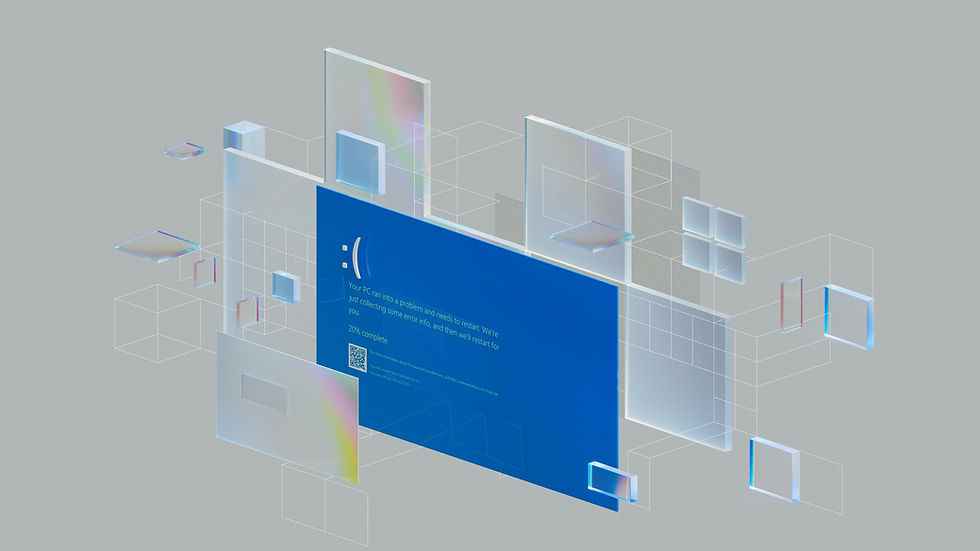
When you search for outage communication, you will find countless templates. Status page copy, holding statements, update cadences—all written for the support and engineering teams who keep the service running. That work matters. However, it is not the hard part for a leader.
The hard part is this: an outage is not just a technical event. It is a trust event. The product failing is a fact. What that failure does to the customer relationship—and therefore to your retention—is decided by how you handle the hours and days around it. Handled well, an outage can leave a customer more confident in you than before. Handled badly, a two-hour technical problem becomes a renewal you lose nine months later. This piece is about that second problem, the one the templates do not touch.
An outage is a trust event, not just a technical one
Most companies prepare for exactly one of the two problems an outage creates. They invest in monitoring, on-call rotations, and incident response so the technical fix is fast. Far fewer prepare for the relationship problem, which runs on a completely different clock.
Engineering measures the incident in minutes to resolution. The customer measures it in whether they felt informed, respected, and safe while their business was disrupted. Those are not the same question, and the second one is where retention is won or lost.
This is why the person best placed to fix an outage is usually the worst placed to manage what it does to customers. Fixing demands deep focus. Communicating demands attention the fixer cannot spare. Treating them as one job, handled by whoever is closest to the problem, is how the message goes silent for forty minutes while customers fill the vacuum with their own worst assumptions.
The counterintuitive part: a well-handled failure can build loyalty
There is a well-documented idea in service research called the service recovery paradox. First described by McCollough and Bharadwaj in 1992, it holds that a customer whose problem is resolved well can end up more satisfied and more loyal than a customer who never had a problem at all. The failure, handled with speed, honesty, and fairness, becomes a moment that proves you can be trusted when it counts.
Two honest caveats must be noted. First, the evidence is mixed. Some studies find the effect is real but rare, and at least one influential study concluded it shows up after mediocre service rather than excellent service. Second, it collapses under repetition. A well-handled first outage can build trust. A third outage in a quarter destroys it, no matter how graceful the communication. The paradox is a reason to handle failure well. It is never an excuse to tolerate an unreliable product.
The practical takeaway for a leader is not that outages are good. It is that the relationship outcome of an outage is not fixed by the outage. It is largely in your hands and is decided by the things the status page templates cannot give you: candour, ownership, and follow-through.
What customers actually judge you on
When the dust settles, customers do not remember your mean time to resolution. They remember how it felt to be your customer while it was happening. Four things drive that, and none of them is the length of the outage.
Did they hear it from you first? The single fastest way to lose trust is to let a customer discover your outage before you tell them. Finding out from their own users or from a competitor turns a shared problem into a reason to doubt you.
Did you tell the truth? Vague reassurance reads as evasion. Customers can tell the difference between "I do not yet know" and "I do not want to say." Honesty about what you do not know buys more trust than confidence you cannot back up.
Did you keep your word? If you say an update in thirty minutes, the update arriving in thirty minutes matters more than its content. A promise kept during a crisis is worth more than one kept on a calm day.
Did you own it? Reaching for a third party to blame, even a true one, reads as ducking responsibility. Owning the impact, whatever the cause, is what customers remember.
The leader's role when the product is down
Here is where customer success leadership separates from incident response, and where most template-driven advice goes quiet. The status page serves everyone at once. It does not serve your ten most important accounts, who need to hear from a human they know.
Separate the jobs. Someone owns the fix. Someone else owns the customer narrative. For anything beyond a minor blip, these should not be the same person, and the communications owner should be named in advance, not volunteered at 2 AM.
Cover the status page and the key accounts. The status page handles breadth. Your Customer Success Managers (CSMs) handle depth, reaching out directly to high-value and at-risk accounts so those customers hear it as a personal message, not a public notice. The bigger the account, the higher up the human contact should sit.
Put a leader in the room for the accounts that matter. A major incident affecting a strategic customer is exactly when a Customer Success leader or an executive should be visible to that customer, not hiding behind a dashboard. Presence in a crisis is a deposit in the relationship that pays out at renewal.
Say the uncomfortable thing early. If an important customer has been hit hard, the worst approach is to wait and hope they did not notice. They noticed. Reaching them first, before they reach you, is the whole game.
After the incident is where retention is decided
The outage ends, most teams exhale, and everyone moves on. That is the moment they leave the retention value on the table. The hours after resolution are where a well-handled incident becomes a trust deposit rather than a near miss.
Close the loop honestly. Tell customers what happened, what you learned, and what you are changing so it does not recur. A clear, blameless post-incident summary signals competence. Silence after resolution signals that you would rather not discuss it.
Follow up personally with the accounts that felt it most. A status page update marks the incident resolved. A CSM call to a shaken key account marks the relationship intact. The second one is what protects the renewal.
Feed it back into the account's health picture. An outage that hit a key account is a risk signal that should show up in your account reviews and your renewal planning, not vanish the moment the service is green. How a customer felt during your worst day is exactly the kind of qualitative signal that usage dashboards miss.
What not to do
A few moves reliably convert a technical problem into a trust problem.
Do not let them find out first. Detect and disclose before your customers do.
Do not go vague. Evasion reads worse than bad news honestly delivered.
Do not blame a third party. Even when a vendor caused it, the customer bought the service from you.
Do not over-promise a fix time. A missed estimate is a second failure on top of the first.
Do not disappear after resolution. The follow-up is where the trust is banked. Skipping it wastes the recovery.
Building the muscle before you need it
You cannot design this in the middle of an incident. The teams that come out of outages with their relationships intact or stronger decided in advance who owns the narrative, which accounts get a human, and what honesty sounds like under pressure. They treat outage response as part of their retention system, not a support afterthought.
They understand the deeper point. How much an outage costs you depends on the relationship equity you built before it. A customer who was already succeeding, already well-served, and already in a real relationship with your team extends you grace when the product stumbles. A customer who was already quietly disengaged uses the outage as the reason they were looking for. The outage does not create the retention outcome on its own. It reveals and tests the relationship you had already built.
This brings it back to the idea underneath all durable retention. The work you do on the calm days is what decides how much a bad day costs you.
Frequently asked questions
Does an outage cause customers to churn?
An outage rarely causes churn on its own. What drives churn is how the outage is handled and the state of the relationship before it. A single well-handled incident can even strengthen loyalty, an effect known as the service recovery paradox. Repeated outages or a single badly communicated one are what turn a technical problem into a lost renewal.
What should a customer success team do during an outage?
While engineering fixes the problem, customer success should own the relationship. That means reaching high-value and at-risk accounts directly with a personal message rather than leaving them to the status page, keeping promises on update timing, and making sure a leader is visible to strategic customers. The goal is that important customers hear about the incident from you first, framed honestly.
What is the service recovery paradox?
It is a concept from service research, first described in 1992, holding that a customer whose problem is resolved well can end up more loyal than one who never experienced a problem. The evidence is mixed and it depends on a genuinely good recovery, so it is best treated as a reason to handle failures well rather than a guarantee. It does not hold up under repeated failures.
Who should communicate with customers during a major incident?
Separate the fix from the message. Engineering resolves the incident. A named communications owner handles the public updates, and customer success handles direct outreach to key accounts, with a CS leader or executive stepping in for the most strategic customers. The person fixing the problem should not also be the person narrating it.
How a customer feels during your worst day is exactly the risk your usage dashboards miss. The* Churn and Retention Diagnostic helps you surface the relationship signals that predict a renewal long before the number moves and The Compounding Customer makes the case that retention is built on the calm days, so the bad ones cost you less
Related Reading
The 90-Day Renewal Playbook → https://www.clientconnectconsult.com/post/90-day-renewal-playbook
How to Improve Net Revenue Retention → https://www.clientconnectconsult.com/post/how-to-improve-net-revenue-retention
What to Say When a Customer Goes Silent → https://www.clientconnectconsult.com/post/what-to-say-when-a-customer-goes-silent-a-b2b-saas-re-engagement-playbook-client-connection-consu


Comments